

THE IRRELEVANT SOUND EFFECT
Quiet recalled best
Recalling eight letters in order, people did best in quiet and worst with music or a stream of random spoken digits.
Check your soundtrackWHAT THE MEMORY STUDIES FOUND
Your favourite playlist may be the noisiest.
Psychologists call it the irrelevant sound effect: sound that keeps changing, like a song with words and shifting notes, interferes with holding things in order in your head. Music before a task is a different story.

QUIET WINS for lists in order
THE SHORT ANSWER
Changing sound competes with mental rehearsal.
Liking the music does not stop it.
THE IRRELEVANT SOUND EFFECT
Recalling eight letters in order, people did best in quiet and worst with music or a stream of random spoken digits.
Check your soundtrackLIKED MUSIC
In a second study, a liked pop song hurt recall more than disliked heavy metal, and listeners did not notice.
See the numbersTHE MOZART EFFECT
A meta-analysis of about 40 studies found no support for spatial gains from listening to Mozart.
The Mozart storyA QUICK SOUNDTRACK CHECK
Pick a sound to see how it affected recalling lists in order in the lab studies. The bar shows how kind it was to that kind of memory.
Based on serial recall experiments with students. Tasks that do not rely on remembering order may be affected differently.
TWO NUMBERS WORTH KNOWING
One figure from a small music experiment,
one from the review that ended the Mozart effect.
25 students
Students in the liked-music experiment
They recalled strings of eight consonants in order. They did best in quiet and worst with a pop song they liked, and did not realise the liked song was hurting them most.
LIKED VS DISLIKED · 2012
3,000+ people
Participants across about 40 studies
University of Vienna researchers pooled published studies and unpublished theses and found no support for spatial ability gains specifically from listening to Mozart.
MOZART META-ANALYSIS · 2010
The researchers explain the effect through acoustic variation: changing sound disrupts the silent rehearsal people use to keep items in order. Mental arithmetic relies on the same kind of rehearsal.
FOUR HABITS TO TRY
These follow the researchers' own suggestions for tasks that involve remembering things in order, such as lists, formulas or dates.
When you are learning a sequence, turn the music off; quiet gave the best recall in every condition tested.
Use music before you start or between sessions, when its lift to mood does not compete with rehearsal.
If you cannot get quiet, a steady, unchanging background did far less harm than speech or songs.
Students did not notice that their favourite music was hurting their recall. Test yourself in both conditions.
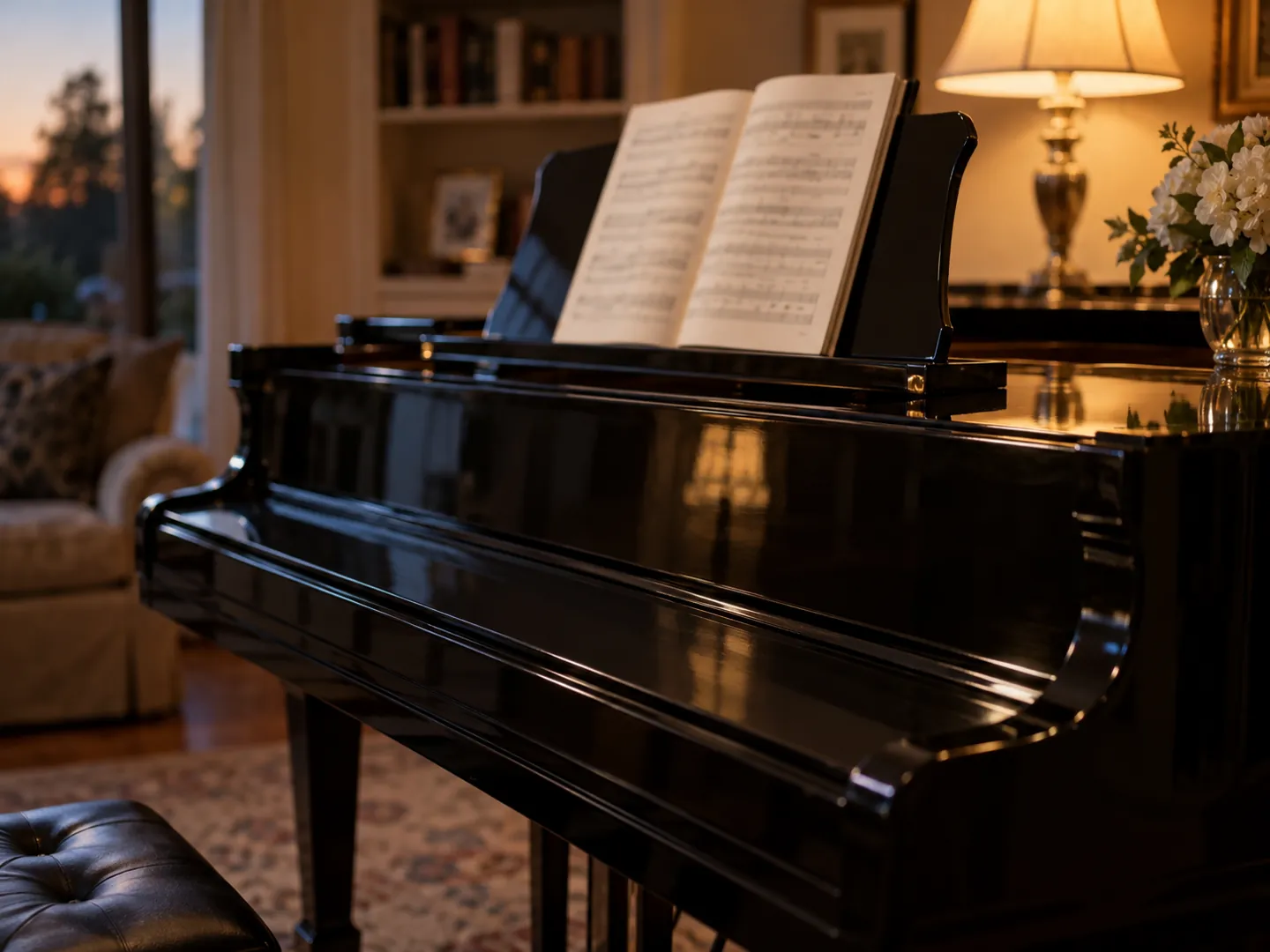
THE MOZART EFFECT
In 1993 a short Nature paper reported better spatial task scores in students after hearing a Mozart sonata. Headlines followed: one US governor proposed a classical music CD for every newborn's mother, and in 1998 Florida required state-funded day care centres to play classical music for an hour a day.
Researchers found the effect hard to replicate. A 2010 University of Vienna meta-analysis of about 40 studies found no specific Mozart effect. Its lead author still recommends listening to Mozart, just not as a way to boost cognitive abilities.
Questions
For memorising things in order, studies found music, liked or disliked, made recall worse than quiet. Tasks that do not depend on order may be affected differently.
The finding that background sound you are trying to ignore still disrupts short-term memory for ordered lists, especially sound that keeps changing, such as speech or songs.
No. In one study, a pop song people liked hurt recall more than disliked heavy metal, probably because it had more acoustic variation. Listeners did not notice.
A 2010 meta-analysis of about 40 studies and more than 3,000 participants found no support for spatial ability gains specifically from listening to Mozart.
No. Research suggests listening before a task can lift mood and arousal. The researchers suggest listening before a task, then working in quiet.
Sources
ABOUT THIS NAME
studydoodles.com is part of the DoodleSale portfolio. It isn't in an auction right now, but you can ask about leasing it.